
In today’s competitive trade world, many struggle to differentiate products and establish a unique selling proposition. Traditional approaches focusing heavily on product features often lead to diminishing returns.
Lean manufacturing transforms trading operations by focusing on value creation through efficiency and strategic control. We shifted from competing solely on product aesthetics to guiding suppliers, enhancing production processes, and developing unique offerings.
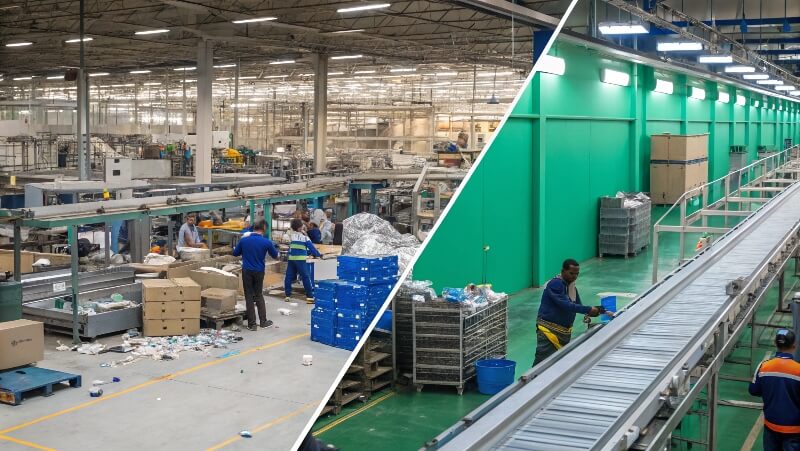
The shift from logistics mover to value manager involves adopting lean methodologies, redefining your role in the supply chain. Our ability to guide suppliers allows us to implement cost-effective, efficient production methods, adding true value to final products.
From Logistics Mover to Value Manager: Redefining Your Role in the Supply Chain?
Trading companies often focus on logistics, limiting growth. The real potential lies in value management.
By utilizing lean practices, you shift from moving boxes to creating value, enhancing supply chain roles and fostering customer relationships. Our insights revealed the power of directing production specifications to create uniquely branded products.

Lean methodologies streamline operations and enhance client satisfaction. Request quotes from multiple factories to secure competitive pricing without quality compromise. Integrate resources across production stages for distinct products. Techniques like repackaging and component upgrades further enhance product uniqueness while maintaining confidentiality.
Value analysis optimizes existing product designs by evaluating functionality and materials. Simplifying structures, substituting materials, or adjusting features helps achieve an optimized cost structure without performance loss.
The Lean Toolkit: 5 Principles to Apply Directly to Your Trading Operations?
Trading operations miss efficiency. Lean principles overcome inefficiencies and boost performance.
Lean manufacturing identifies and eliminates waste, improving processes. Our use of rapid prototyping tools like 3D printing and silicone molding accelerates development time while reducing costs.

Lean principles like Continuous Improvement (Kaizen) and Pull Systems streamline operations. Continuous Improvement encourages regular analysis for growth, while Pull Systems align production with demand, reducing overproduction.
Our strategy includes negotiating with suppliers for lower Minimum Order Quantities (MOQs). Understanding their constraints reveals mutual opportunities to reduce initial order requirements, leading to decreased procurement costs.
Implementing lean tools ensures smoother operations, better resource use, and enhanced client satisfaction. These practices validate market fit before large-scale production, minimizing risk and investment.
The Bottom Line Boost: How Lean Directly Increases Margins and Client Retention?
High costs and client churn worry traders. Lean manufacturing addresses these, enhancing bottom line results.
Lean techniques increase efficiency, improving margins and boosting client retention through informed strategies. Constructive supplier negotiations find ways to lower procurement costs without compromising quality.
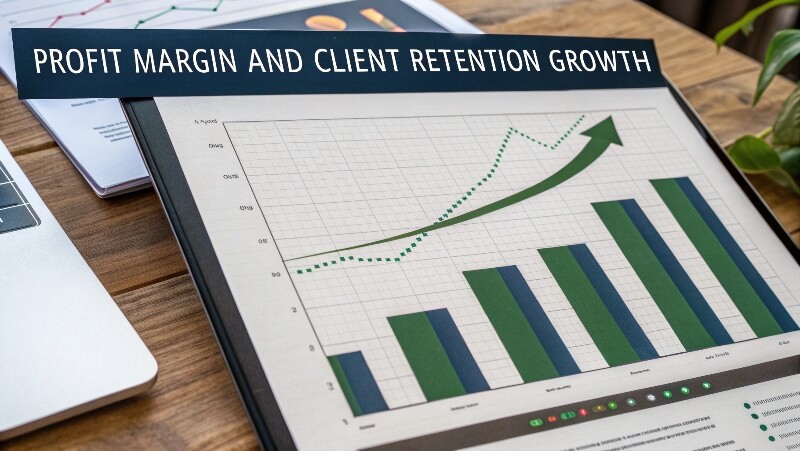
Lean practices lead to immediate operational cost improvements, better profit margins, and enhanced customer service quality. This encourages client retention and extends market reach.
Customer focus is a core element; understanding needs and adapting services ensures satisfied, loyal clients. Sustainable lean practices create long-term value, offering consistent growth and stability for trading companies.
Your First Move: A 4-Step Action Plan to Stop Moving Boxes and Start Creating Value?
Feeling overwhelmed by starting lean processes? A strategic plan brings clarity.
A four-step action plan helps transition from logistics to value creation, supporting sustainable growth with scientifically validated strategies.

Begin by assessing current processes to identify inefficiencies. Engage your team, set objectives, and regularly evaluate progress. Invest in training to empower employees, fostering ownership and innovation.
Our approach uses rapid prototyping to validate market fit before committing to large-scale production. This method reduces risk and investment, ensuring each decision adds value.
This pragmatic plan ensures trading companies evolve from merely moving boxes to creating substantial value, reinforcing their role as indispensable supply chain partners.
My Personal Experiences
For years, our purchasing team was trapped in a common industry dilemma: in a sea of nearly identical products, how do you find a differentiated offering and build a unique selling proposition (USP)? Our initial approach—endlessly competing on minor features and aesthetics—proved to be a race to the bottom with ever-diminishing returns.
A fundamental shift occurred when we integrated Lean Manufacturing’s core tenet of "defining value from the customer’s perspective" with the agile MVP (Minimum Viable Product) methodology. Managing multi-category sourcing and development projects unveiled our real competitive edge: we could evolve from passive order-takers to active supply chain orchestrators. We learned to guide our manufacturing partners to produce goods our way—unlocking lower costs, mitigating risk, and achieving unmatched efficiency.
This is how we transitioned from simply "moving boxes" to engineering tangible value:
1. Strategic Sourcing: Beyond the "Direct-to-Factory" Myth
While eliminating the middleman seems logical, it doesn’t guarantee the best price. Our power derives from leveraging a vast network to benchmark multiple factories. This competitive pressure ensures we secure the optimal combination of price and quality—an advantage most individual factories or end-clients cannot replicate on their own.
2. Value Chain Orchestration: Crafting Unique Offerings
We create defensible value by integrating specialized factories across the supply chain. This allows us to design unique product ecosystems or configurations that stand apart in the market. We can also implement compartmentalized production—such as using different suppliers for components and final assembly—to protect intellectual property and control the final product specification.
3. Cost Engineering: Optimizing Existing Products Intelligently
Rather than commissioning expensive custom designs, we employ value analysis to reverse-engineer and optimize a product’s cost structure. By scrutinizing components, materials, and functionalities, we identify opportunities to reduce costs significantly while preserving, or even enhancing, the original quality and performance.
4. Agile Development: De-risking Innovation with MVP
We apply the MVP model to hardware by leveraging rapid prototyping (3D printing, silicone molds) and low-volume tooling. This agile approach slashes development costs and compresses time-to-market, allowing us to validate product-market fit with real customer feedback before committing to large-scale capital investment.
5. Collaborative MOQ Negotiation: Unlocking Flexibility
High Minimum Order Quantities (MOQs) are often a major barrier. Instead of superficial price haggling, we engage in root-cause analysis with suppliers. By understanding the cost drivers behind their MOQs, we find collaborative solutions—such as adjusting payment terms, material lead times, or modular design—to lower thresholds without sacrificing their margins, thereby reducing our inventory risk and upfront costs.
These are not theoretical concepts. This is our validated playbook for transforming a traditional trading company from a replaceable logistics link into an indispensable, value-creating strategic partner.
Conclusion
Lean manufacturing transforms trading operations, turning inefficiencies into value creation, enhancing margins, client retention, and fostering sustainable growth through strategic control.
Leave a Reply