
Value Engineering can feel like a mystery, but it holds great potential for businesses. It’s the secret tool you didn’t know you needed.
Value Engineering is a systematic method used to improve the value of a product or process by examining its functions. It minimizes costs without compromising quality.

By grasping the essence of value engineering, we unlock new areas for efficiency and cost savings, ensuring better resource usage and higher profits.
What is value engineering with an example?
Value Engineering might seem complex, but real-life examples make it clearer. Let’s dive into how it shines in practice.
An example of value engineering is redesigning a product to use less material while maintaining its function. This reduces costs and improves profitability without sacrificing quality.

Dive deeper into the practical aspects: imagine a chair manufacturer. Traditionally, they used solid wood for all components. Through value engineering, they discover that using metal frames and plastic seating meets customer needs, significantly reducing material costs. Here’s how they execute:
| Traditional Design | Value Engineered Design |
|---|---|
| Solid Wood Frame | Metal Frame |
| Solid Wood Seat | Plastic Seat |
| Higher Material Costs | Lower Material Costs |
Shifting from wood to metal and plastic maintained functionality and aesthetics. The manufacturer cut costs without losing quality, demonstrating value engineering’s magic.
What are the aims of value engineering?
Sometimes, the purpose of value engineering gets lost. But understanding its goals is key to success.
The primary aims of value engineering include improving project value, optimizing costs, and increasing product performance, all while maintaining or enhancing quality.

To achieve these aims, a business must focus on process efficiency and resource allocation. Elaborating more: consider an electronics company aiming to enhance a smartphone’s battery life. Instead of adding costly battery components, they explore software and hardware optimizations. By optimizing power usage, they enhance performance without raising costs. This strategic approach not only cuts production cost but also elevates the user experience. The focus on core function leads to innovative solutions, demonstrating the power of value engineering.
What are the six basic steps of value engineering?
Breaking down processes into steps makes understanding easier. Value engineering involves specific steps to ensure success.
The six basic steps of value engineering are information gathering, function analysis, brainstorming ideas, evaluating ideas, development, and presentation.
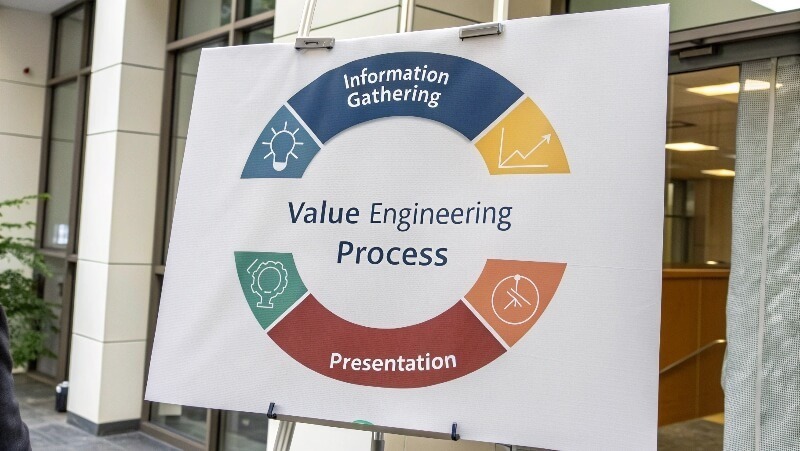
Understanding these steps helps get the best from value engineering. Let’s dive deeper:
- Information Gathering: Collect data about current designs or processes, laying out all facts.
- Function Analysis: Understand the core functions of each component. This helps target improvements.
- Brainstorming Ideas: Generate a wide range of ideas to improve the identified functions. No idea is too wild at this stage.
- Evaluating Ideas: Weigh the pros and cons of each idea, focusing on cost, feasibility, and impact.
- Development: Develop detailed plans, ensuring alignment with value engineering goals.
- Presentation: Present findings and recommendations clearly to decision-makers.
These steps are cyclical and iterative. As businesses adopt this method, the clarity of actual needs emerges, evolving their approach to cost-effective, efficient value solutions.
Conclusion
Value engineering is about optimizing functions, reducing costs, and improving quality. It’s a transformative approach to sustaining business growth and efficiency.
Leave a Reply