
The global shift to renewable energy has heightened interest in China’s solar panel manufacturers. But who stands out in this booming landscape?
China leads the world in solar panel production, offering diverse products that suit different needs. Understanding the leading manufacturers helps navigate this growing market effectively.
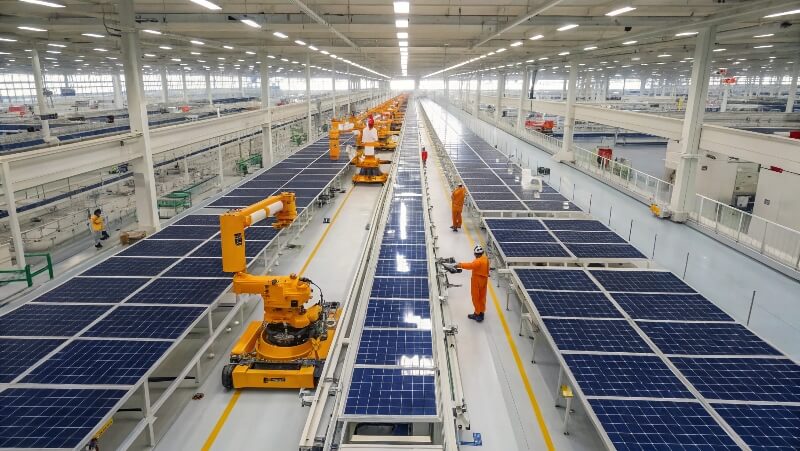
The renewable energy market is rapidly expanding, driven by innovations and government policies. With so many players, knowing the top manufacturers is crucial for consumers and businesses alike.
What is the size of the solar panel market?
Emerging markets are driving a surge in demand for solar panels, promising transformative growth.
The solar panel market is projected to exceed $223 billion by 2026, making it one of the fastest-growing sectors in renewable energy. This expansion is fueled by advancements in technology and supportive government policies.

The industry has witnessed remarkable growth, attributed to increased environmental awareness and cost-effective technology. Governments worldwide support this transition, offering incentives and policies that spur investment. As a result, solar energy becomes increasingly accessible, transforming both residential and industrial sectors.
What are the four main types of solar panels?
The variety in solar panels can overwhelm. Understanding different types simplifies decision-making.
The four main types of solar panels are Monocrystalline, Polycrystalline, Thin-film, and Bifacial. Each type has unique characteristics suited for various applications, impacting efficiency, cost, and aesthetics.
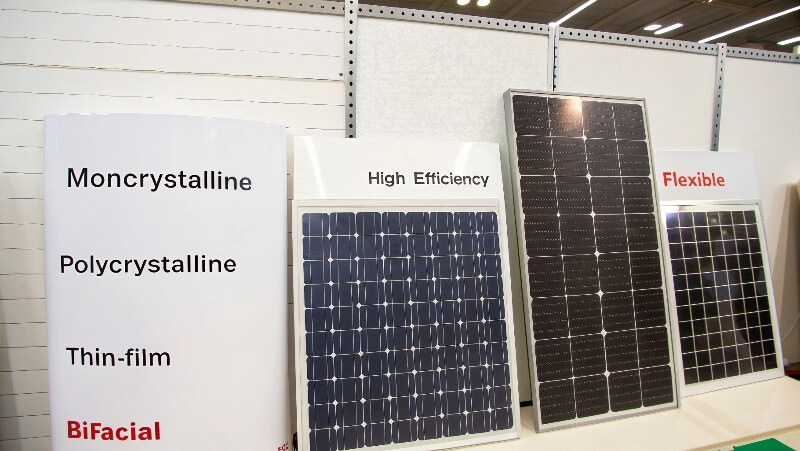
To choose the right solar panel, it’s vital to consider factors like energy needs, budget, and location. Monocrystalline panels are known for high efficiency, while Polycrystalline offers a balance of performance and cost. Thin-film panels are flexible, and Bifacial panels capture light on both sides, maximizing output.
| Panel Type | Efficiency | Cost | Best Use |
|---|---|---|---|
| Monocrystalline | High | Higher | Limited space, high need |
| Polycrystalline | Moderate | Moderate | Balanced needs |
| Thin-film | Low | Lower | Large spaces, flexibility |
| Bifacial | High | Higher | Open, reflective areas |
What are the basic components of the solar system?
Understanding system components demystifies solar technology, promoting informed choices.
A solar system primarily comprises solar panels, inverters, racking, and batteries. These components work in unison to convert sunlight into usable electricity, impacting the system’s efficiency and longevity.
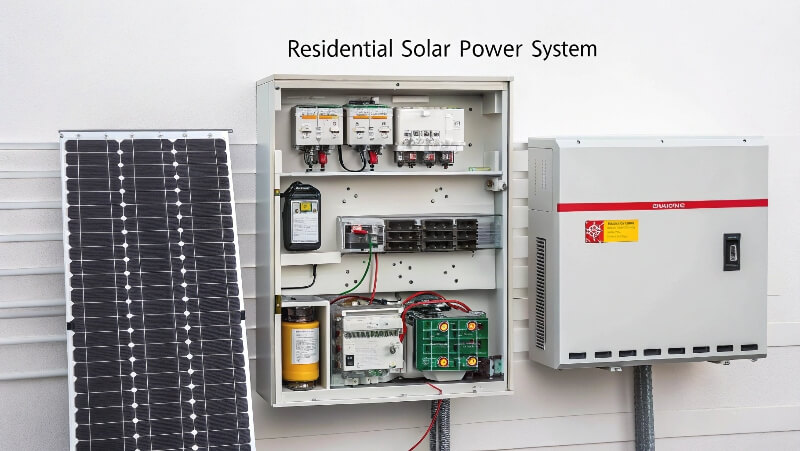
Solar panels absorb sunlight, which inverters convert into electricity. Racking systems support panels, optimizing orientation and angle. Batteries store excess power for use when sunlight is unavailable. Understanding each component’s role helps in selecting the right configuration suited to specific energy needs.
| Component | Function |
|---|---|
| Panels | Capture sunlight |
| Inverters | Convert solar energy to electricity |
| Racking | Support and optimize panel placement |
| Batteries | Store energy for future use |
Top 15 Solar Panel Manufacturers in China 2025
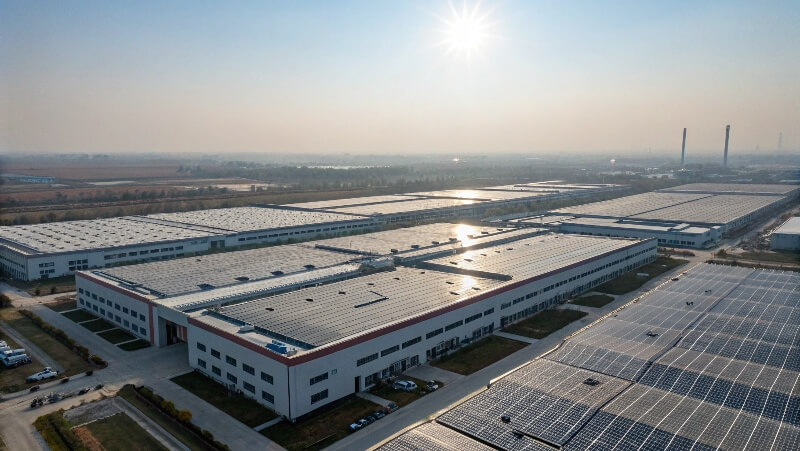
China continues to dominate the global solar panel industry in 2025, accounting for over 80% of worldwide photovoltaic manufacturing capacity. The following list highlights the top 15 manufacturers based on shipment volumes, innovation, market share, and production scale as of mid-2025. Each entry includes a brief background introduction.
1. JinkoSolar
JinkoSolar, founded in 2006 and headquartered in Shanghai, China, is the world’s leading solar panel manufacturer, having shipped over 47.2 GWp of modules in the first half of 2024 alone. With 14 factories across China, Malaysia, Vietnam, and the US, and employing 57,000 people, the company specializes in high-efficiency monocrystalline and bifacial modules for residential, commercial, and utility-scale projects. JinkoSolar became the first solar firm to surpass 210 GWp cumulative shipments in 2023, emphasizing R&D with eight global centers focused on sustainable energy solutions.
2. JA Solar
JA Solar, established in 2005 in Beijing, China, tops Wood Mackenzie’s 2024 rankings with a score of 82.9/100 for module manufacturing excellence. It shipped 57.094 GW of modules in 2023, with nearly half exported overseas, generating $11.426 billion in revenue. Renowned for monocrystalline silicon wafers, high-quality cells, and efficient modules like its DeepBlue series, JA Solar supports large-scale solar systems and has a strong global presence, producing components that achieve up to 23% efficiency.
3. Trina Solar
Founded in 1997 in Changzhou, China, Trina Solar maintains its position as a global leader, with cumulative shipments exceeding 205 GW by Q1 2024 and 2023 revenues of $15.886 billion—a 33% year-over-year increase. The company pioneers smart solar solutions, including Vertex N-series modules with n-type i-TOPCon technology reaching 22.5% efficiency. With regional headquarters in Europe, the Americas, and Asia-Pacific, Trina employs talents from over 30 countries and focuses on utility-scale and distributed generation projects.
4. LONGi Green Energy Technology
LONGi, established in 2000 in Xi’an, China, is a vertically integrated giant with 31.3 GWp shipped in H1 2024 and over 60,000 employees across 30+ countries. Specializing in monocrystalline silicon wafers, cells, and Hi-MO series modules, LONGi leads in efficiency innovations like HPBC 2.0 cells targeting 26%+. Its Ningxia center houses six factories, and the company emphasizes sustainability, reducing carbon footprints through 54 solar farms in China that cut emissions by 3.3 million tons.
5. Tongwei Solar
Tongwei, founded in 2006 in Chengdu, China, made history in 2023 as the first solar company on the Fortune Global 500 list, reporting $594 million in annual profits by March 2025. It shipped 10 GWp in H1 2024 and excels in polycrystalline and monocrystalline modules, with a focus on integrated supply chains from polysilicon to panels. Tongwei’s 54 solar farms in China underscore its commitment to green energy, while its rapid expansion supports global exports amid China’s 1,230 GW domestic installed capacity milestone in mid-2025.
6. Canadian Solar (CSI Solar)
Canadian Solar, founded in 2001 with headquarters in Guelph, Canada, but major manufacturing in Suzhou, China, ranks fourth in Wood Mackenzie’s assessments with a score of 78.5/100. It shipped significant volumes in 2024, offering high-performance modules like the HiKu and BiHiKu series for diverse applications. With factories in China, Vietnam, and Brazil, CSI emphasizes bifacial and TOPCon technologies, serving over 160 countries and integrating energy storage solutions for commercial and utility projects.
7. Risen Energy
Risen Energy, established in 1986 in Ningbo, China, ties for fifth in global rankings with a Wood Mackenzie score of 78, shipping 10+ GWp annually. Known for its Hyper-ion series n-type heterojunction (HJT) modules achieving 23%+ efficiency, the company focuses on R&D-driven innovations like zero-busbar (0BB) designs. Risen operates vertically integrated facilities and exports to over 40 countries, contributing to China’s dominance in wafer and cell production growth of 26% and 76% respectively in H1 2025.
8. Aiko Solar
Aiko Solar, founded in 2009 and headquartered in Shanghai, China, specializes in N-type all-back-contact (ABC) monocrystalline modules, shipping 12 GWp in H1 2024. Its Infinite series reaches 25.15% module efficiency, with TOPCon 5.0 cells targeting 27% in 2025. With a 66 GW cell and module capacity, including a new 30 GW Jinan factory, Aiko drives advancements in back-contact technology, serving residential and commercial markets while expanding globally.
9. DAS Solar
DAS Solar, launched in 2018 in Hangzhou, Zhejiang, China, rapidly ascended to the top ranks, shipping 10 GWp of n-type and p-type panels in H1 2024. Its TOPCon 5.0 technology, developed with UNSW and Zhejiang University, delivers 27% cell efficiency and 670W+ modules. Owning 14 factories across China and planning a 3 GW European plant in France by 2025, DAS focuses on sustainable, high-output solutions amid China’s oversupply-driven export surge.
10. GCL System Integration
GCL System Integration, part of the GCL Group founded in 2006 in Suzhou, China, shipped 10 GWp in H1 2024 despite industry challenges, including a $213 million net loss due to domestic saturation. Specializing in PERC and TOPCon modules, it operates integrated facilities for wafers, cells, and panels, emphasizing cost-effective production. GCL supports global utility projects but faces pressures from China’s 208 GW solar exports in H1 2025.
11. Astronergy (Chint New Energy)
Astronergy, established in 2006 under the Chint Group in Hangzhou, Zhejiang, China, produces ASTRO N-series modules certified for low carbon (380 kgCO₂/kWc). It shipped 15 GW in 2023 and joined RE100 for 100% renewable energy use. With a focus on sustainability and bifacial panels, Astronergy navigates U.S. tariffs and EU subsidy probes while expanding production to meet global demand for efficient, eco-friendly solutions.
12. DMEGC Solar
DMEGC Solar, founded in 2007 in Dalian, China, ranks ninth in Wood Mackenzie’s list with a score of 74.1, known for high-efficiency monocrystalline modules like its Sirius series. As part of the DMEGC Group, it integrates glass and frame production for cost advantages, shipping volumes supporting China’s 460 GW module capacity in 2021 (now exceeding 1,000 GW). DMEGC emphasizes quality control and exports to Europe and Asia.
13. Seraphim Solar
Seraphim Solar System, established in 2011 in Nanjing, China, specializes in affordable, high-reliability modules for emerging markets, with cumulative shipments over 20 GW. It focuses on PERC and half-cut cell technologies, achieving 21%+ efficiency. Backed by investor support, Seraphim expands in Africa and Latin America, contributing to China’s role in lowering global PV costs through scaled manufacturing.
14. Yingli Solar
Yingli Solar, founded in 1998 in Baoding, China, has distributed over 15 GW of panels globally through 30+ regional offices. Known for its Panda series bifacial modules, it pioneered early PV adoption in China and recovers from past challenges with renewed focus on n-type cells. Yingli supports distributed generation and maintains a strong domestic presence amid China’s 15% annual solar growth to 2,500 GW by 2030.
15. Talesun Solar
Talesun Solar, part of the Twinsun Group founded in 2010 in Tianjin, China, produces high-efficiency modules like the T series, reaching 22%+ with multi-busbar tech. Shipping 5+ GW annually, it emphasizes vertical integration and quality certifications, serving utility-scale projects worldwide. Talesun’s growth aligns with China’s industrial clusters in eastern provinces, driving innovations in flexible and lightweight panels.
Partnering with Feiliz: Your Strategic Advantage in the Solar Panel Business
Navigating China’s complex solar landscape demands local expertise, ensuring strategic alignment with global goals.
Partnering with Feiliz provides a competitive edge, offering cost optimization and supply chain solutions. As a trusted partner, Feiliz excels in streamlining operations, enhancing product development, and navigating regulatory complexities, making it the ideal ally in China’s dynamic solar market.

Feiliz aligns with diverse strategic needs, offering end-to-end solutions in cost reduction, product development, and supply chain management. Its deep expertise and local connections facilitate seamless integration into the Chinese market, ensuring success and growth.
Leave a Reply