
Transforming a brilliant idea into a successful product can be a daunting journey filled with challenges that might either propel or hinder your product’s success.
Managing the New Product Introduction (NPI) process smoothly involves strategic planning, understanding frameworks like APQP, and following a detailed action plan. This ensures timely and budget-friendly product delivery that meets quality expectations.

To achieve a seamless product launch, it’s essential to understand foundational concepts, leverage proven frameworks, and develop a comprehensive roadmap. Let’s explore the essentials of New Product Introduction.
What is New Product Introduction? – The Foundation
Turning ideas into reality requires more than creativity; it requires a structured approach that bridges vision with execution.
New Product Introduction (NPI) is a systematic approach ensuring products are designed, developed, and launched efficiently and effectively, paving the way for successful market entry.
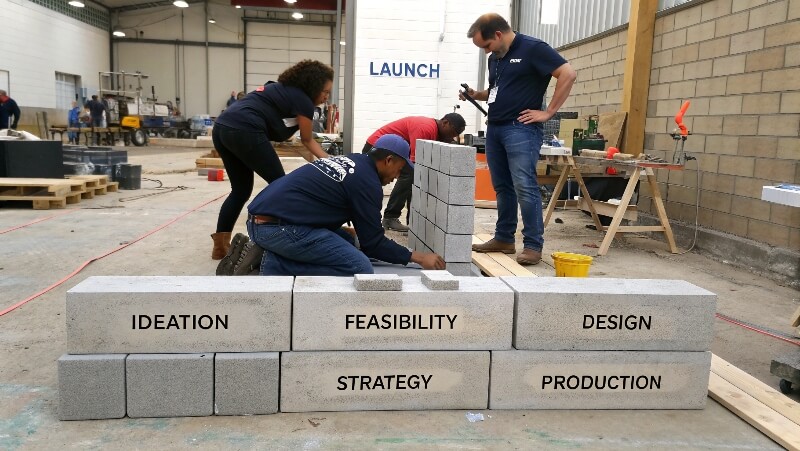
NPI is about aligning development efforts with market demands through a series of well-defined phases. This process minimizes errors, optimizes design, and accelerates time to market. By focusing on key stages like idea generation, feasibility study, design and development, market strategy, and production ramp-up, businesses can anticipate and address potential challenges proactively. The NPI framework fosters collaboration among teams, ensuring alignment with business goals and maximizing market potential.
What is APQP? The 5-Stage Framework for Quality Planning
Ensuring product quality is paramount, and it requires intentional planning and rigorous execution.
APQP, or Advanced Product Quality Planning, is a five-stage framework designed to ensure products meet or exceed customer expectations through stringent quality planning.
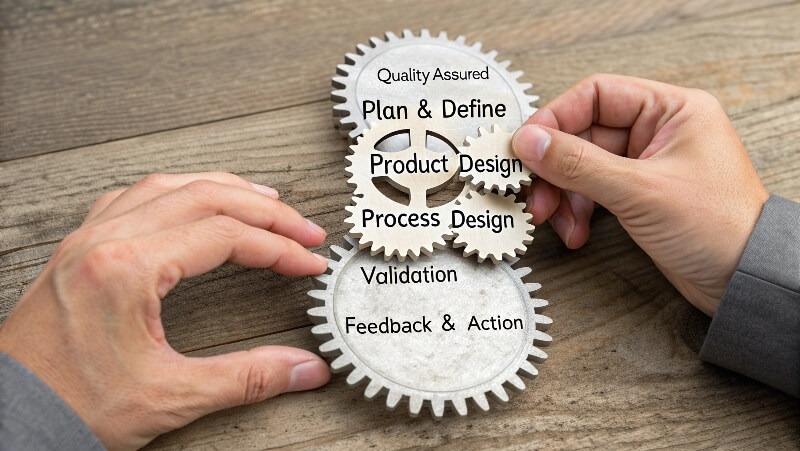
The APQP framework consists of five stages: Plan and Define Program, Product Design and Development Verification, Process Design and Development Verification, Product and Process Validation, and Production Feedback, Assessment, and Corrective Action. Each stage represents a step toward integrating quality into every aspect of the product lifecycle. Such thoroughness is critical across industries where precision and reliability are key. By incorporating APQP, companies can prevent costly defects, reduce development costs, and promote effective communication across departments, ensuring alignment with quality objectives.
NPI vs. APQP: Understanding the Relationship
While often intertwined, NPI and APQP serve distinct yet complementary roles in product development.
NPI encompasses the entire lifecycle of bringing a product to market; APQP focuses on embedding quality within that process. Together, they ensure successful product launches that meet quality standards.
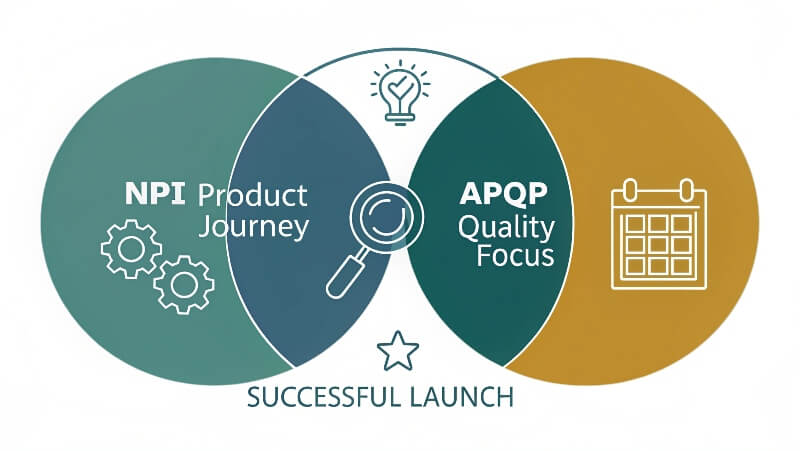
NPI takes a comprehensive approach, including market analysis, strategic planning, and feedback. In contrast, APQP emphasizes maintaining quality throughout each NPI stage. Integrating APQP within NPI frameworks ensures quality considerations are embedded from the ground up. This not only enhances efficiency but also bolsters reliability and customer trust. By working hand-in-hand, NPI and APQP provide a robust structure that transforms innovative ideas into market-ready, high-quality products.
The 7-Step Action Plan to Launch a New Product Successfully
A clear, actionable roadmap transforms an idea into a market-ready product.
Launching a new product successfully follows a 7-step action plan: Ideation, Feasibility Study, Design and Prototyping, Testing and Validation, Market Strategy, Production Planning, and Launch. Attention to each step ensures a robust market entry.
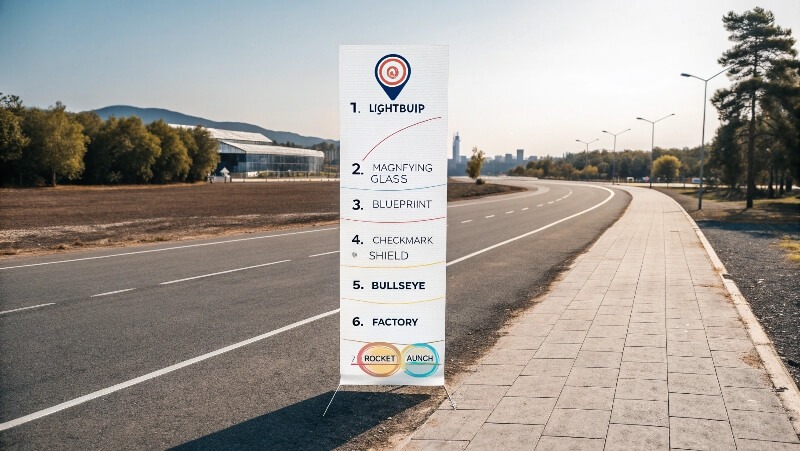
- Ideation: Identify market needs through brainstorming.
- Feasibility Study: Evaluate technical feasibility and financial viability.
- Design and Prototyping: Develop blueprints and functional prototypes.
- Testing and Validation: Execute rigorous tests to ensure product reliability.
- Market Strategy: Craft a strategic plan targeting audience needs and competitive positioning.
- Production Planning: Coordinate supply chain readiness and production capacity.
- Launch: Implement marketing campaigns and adjust based on initial feedback.
Each of these steps requires detailed preparation and teamwork. Effective collaboration, open communication, and continuous feedback loops ensure the product not only fulfills market requirements but excels, setting a solid foundation for competitive advantage.
Conclusion
Mastering the NPI process through the use of frameworks like APQP and a detailed action plan is crucial for a smooth product launch, ensuring quality, efficiency, and alignment with market demands.
Leave a Reply